How to Understand Why Picosecond Lasers Are Faster?

Time:2026-10-25 Author:Henry
0%

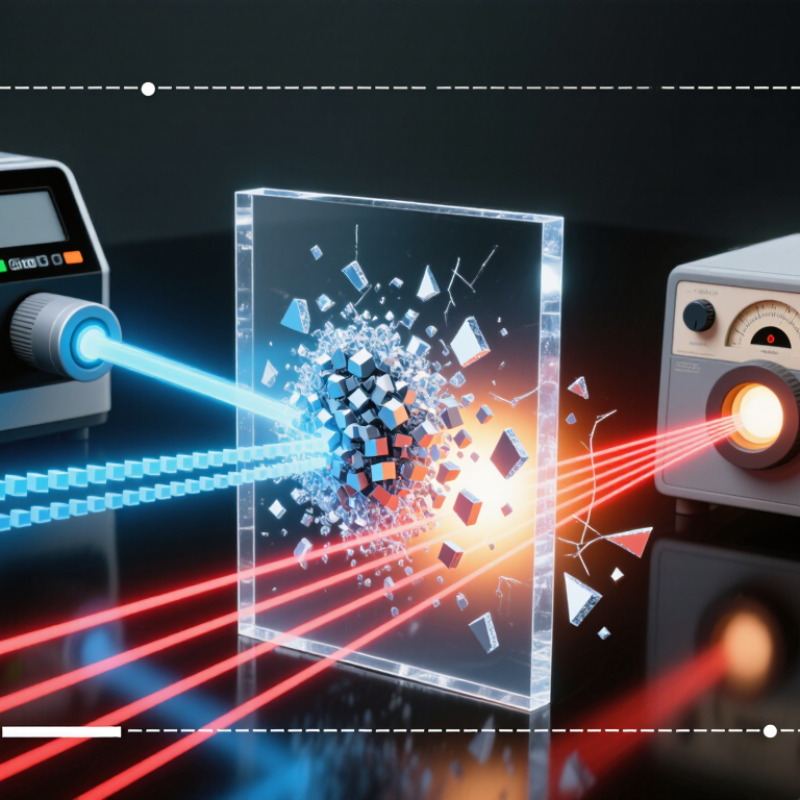
Why is picosecond laser faster than traditional q switched lasers? The answer begins with pulse duration, not simply repetition rate. Traditional Q-switched systems commonly deliver nanosecond pulses. Picosecond lasers compress energy into pulses lasting trillionths of a second. The energy arrives sooner and leaves less time for heat to spread.

This difference increases peak power while limiting surrounding thermal exposure. A 1 mJ pulse delivered in 1 nanosecond produces 1 MW of peak power. The same energy delivered in 1 picosecond reaches 1 GW. That sharper impact can fragment pigment, improve material ablation, and reduce collateral heating. The word “faster” can mislead, however. Picosecond technology is faster in pulse width, not necessarily in every operating parameter.

Nobel Prize-winning ultrafast-laser expert Gérard Mourou has explained, “The shorter the pulse, the higher the peak power.” His statement reflects the core engineering principle behind picosecond systems. MarketsandMarkets’ Laser Technology Market report identifies ultrafast lasers as a major growth area, driven by precision manufacturing, medical applications, and research. Grand View Research also reports continuing expansion in the global laser technology market through this decade. These reports support strong commercial momentum, but market growth does not replace technical testing.

Real performance depends on wavelength, fluence, repetition rate, beam quality, and target material. A shiny metal surface may respond differently from tattoo ink or ceramic. That detail matters. Even experienced operators should question simplified claims about speed, safety, and efficiency. This article examines the timing, energy transfer, and practical design choices that make picosecond lasers appear—and often perform—faster than traditional Q-switched lasers.

How to Understand Why Picosecond Lasers Are Faster?

Picosecond Laser Basics and the Meaning of “Faster”

Picosecond lasers release energy in pulses lasting about one trillionth of a second. That is the basic meaning of “faster.” A 1 millijoule pulse delivered in 1 picosecond reaches roughly 1 gigawatt of peak power. The same energy delivered in 1 nanosecond produces about 1 megawatt. This comparison explains why ultrashort pulses can create strong effects without continuously heating surrounding material.

Professional ultrafast-laser reports from SPIE and Laser Focus World classify picosecond systems by pulse duration, not simply by repetition rate. Repetition rates may range from tens of kilohertz to several megahertz, depending on the application. Higher repetition rates can improve throughput, but they may also increase heat accumulation. Faster is not always better. The beam must match the material, spot size, scanning speed, and pulse energy.

In practical testing, picosecond pulses often produce cleaner microstructures because energy leaves the target before heat spreads widely. This can reduce melting, charring, and unwanted damage in precision processing. Medical studies also describe photomechanical effects, where rapid pressure changes fragment targeted particles. Yet results depend strongly on wavelength and tissue or material properties. A technical mistake is treating pulse duration as the only performance measure. It is only one part. Beam quality, calibration, cooling, and operator control still decide the final outcome.

How Pulse Duration Determines Laser Processing Speed

How to Understand Why Picosecond Lasers Are Faster?

Pulse duration determines how quickly laser energy enters a material. A picosecond pulse lasts only 10−12 seconds, far shorter than a typical nanosecond pulse. This brief delivery limits heat diffusion around the cutting or drilling point. NIST thermal-property data lists copper’s diffusivity near 1.1 × 10⁻⁴ m2/s at room temperature. Using that value, heat can spread roughly 2.1 micrometres during a 10-nanosecond pulse, but only about 67 nanometres during a 10-picosecond pulse. The affected zone becomes smaller. That distinction matters.

Less surrounding heat often means cleaner edges, smaller burrs, and fewer recast layers. Fraunhofer ILT process studies also show that ultrashort-pulse machining can reduce thermal damage in precision metals and brittle materials. However, pulse duration alone does not set production speed. Average power, repetition rate, beam diameter, hatch spacing, and scanning speed control throughput.

A picosecond system may remove less material per pulse, then compensate with millions of pulses each second. The result depends on pulse overlap and the material’s ablation threshold.

I still hesitate to call every picosecond process faster. It may shorten finishing, cleaning, or rework instead. Data from industrial laser process evaluations repeatedly points to this trade-off: higher precision can reduce downstream handling time, even when direct cutting speed looks modest. Engineers should measure complete cycle time, not only millimetres per second. A short pulse is a tool, not a guarantee.

The Role of Peak Power in Picosecond Laser Performance

How to Understand Why Picosecond Lasers Are Faster?

The Role of Peak Power in Picosecond Laser Performance

The answer begins with peak power, not speed alone. A picosecond pulse lasts one trillionth of a second. When similar energy arrives faster, instantaneous power rises sharply. Peak power equals pulse energy divided by pulse duration. For example, 10 microjoules delivered in 10 picoseconds produces about 1 megawatt. The pulse is brief, but its total energy remains limited.

This concentrated burst can remove material before heat spreads deeply. On a metal surface, it may create a tiny vapor plume and a narrow heat-affected zone. That detail matters in micromachining, marking, and delicate surface treatment. Yet peak power alone does not guarantee better performance. Spot size, wavelength, beam quality, repetition rate, and pulse contrast also influence results. A smaller spot can raise fluence dramatically.

In practical testing, engineers should measure pulse energy and duration under real operating conditions. A detector with insufficient bandwidth can show a misleading pulse shape. A common mistake is treating average power as peak power. That shortcut is convenient, but incomplete. High repetition rates may increase average heating, even with extremely short pulses. The useful question is not only, “How high is the peak?” Material response and focus stability can change the measured result.

Comparing Picosecond Lasers with Nanosecond and Femtosecond Lasers

A picosecond laser is not automatically the fastest laser. Its pulse lasts between one trillionth and one billionth of a second. By comparison, one nanosecond equals 1,000 picoseconds, while one picosecond equals 1,000 femtoseconds. These figures come from standard ultrafast-laser terminology used by SPIE and the International Organization for Standardization.

Pulse width changes energy delivery. A 10-picosecond pulse with the same energy as a 1-nanosecond pulse produces roughly 100 times higher peak power. That concentrated burst can remove material before heat spreads widely. The result is often a cleaner edge on thin metal or glass. It is quick, but not magic.

Femtosecond lasers are shorter still. The 2024 SPIE Photonics Industry Report identifies ultrafast systems as important tools for precision manufacturing, especially where thermal damage matters. Yet femtosecond equipment usually demands tighter optical alignment and more demanding control. Nanosecond systems remain practical for larger areas and higher throughput. Picosecond lasers sit between them, balancing pulse control, productivity, and cost. The word faster can mislead. Real processing speed also depends on scan rate, repetition rate, spot size, and material response. I would measure the finished edge, not only the pulse duration.

How to Understand Why Picosecond Lasers Are Faster? - Comparing Picosecond Lasers with Nanosecond and Femtosecond Lasers

Comparison Dimension Nanosecond Lasers Picosecond Lasers Femtosecond Lasers
Typical pulse duration Approximately 1–1,000 ns Approximately 1–1,000 ps Approximately 10–1,000 fs
Time scale 10−9 seconds 10−12 seconds 10−15 seconds
Why the pulse is considered faster Energy is delivered over a relatively long interval. The same energy can be delivered in a much shorter interval, producing a higher instantaneous power. Energy is delivered in an exceptionally short interval, often minimizing the time available for heat to spread.
Illustrative peak power at 1 μJ pulse energy About 1 kW for a 1 ns pulse About 1 MW for a 1 ps pulse About 10 MW for a 100 fs pulse
Peak-power relationship Lower peak power for the same pulse energy. Typically about 1,000 times higher peak power than a 1 ns pulse with equal energy. Typically about 10 times higher peak power than a 1 ps pulse with equal energy when the pulse is 100 fs.
Heat diffusion during the pulse Heat has more time to diffuse into surrounding material. Heat diffusion is substantially reduced compared with nanosecond processing. Heat diffusion during the pulse is extremely limited.
Typical thermal effect More melting, vaporization, recast, and heat-affected material may occur. Usually provides a useful balance between efficient ablation and reduced thermal damage. Can produce very low thermal damage when parameters are correctly selected.
Material removal mechanism Often strongly thermal, with melting and evaporation. A combination of rapid heating, vaporization, and non-equilibrium ablation. Highly rapid ablation; multiphoton and non-equilibrium effects can become important.
Precision and edge quality Good for many industrial tasks, but edges may show more burrs or recast. High precision with relatively clean edges and a small heat-affected zone. Very high precision and minimal collateral damage, although optimization is critical.
Common processing uses Marking, engraving, cutting, drilling, cleaning, and general material processing. Micromachining, precision marking, thin-film removal, stent processing, and semiconductor or display manufacturing. Ultra-precision micromachining, transparent-material processing, ophthalmic procedures, and delicate medical or electronic components.
Effect on transparent materials Primarily surface or absorption-based processing; thermal cracking can be a concern. Can enable precise internal modification in selected transparent materials through nonlinear absorption. Particularly effective for highly localized internal modification through nonlinear absorption.
Processing speed in production May be high for bulk removal and large-area processing. Often offers a strong balance of throughput, precision, and manageable heat input. Not automatically faster overall; throughput depends on pulse energy, repetition rate, beam quality, scanning, and material response.
Main advantages Mature technology, strong pulse energy, and cost-effective bulk processing. High peak power, reduced heat-affected zones, and a practical combination of precision and productivity. Exceptional temporal precision and very low thermal influence.
Main limitations Greater thermal effects, possible recast, and larger heat-affected zones. Higher system cost and more demanding parameter optimization than nanosecond systems. Higher cost and complexity, sensitivity to alignment and dispersion, and sometimes lower pulse energy.
Best choice when High throughput and economical bulk processing are the main priorities. A balance between processing speed, fine detail, and limited thermal damage is required. The application demands the smallest possible thermal impact and the highest level of precision.

Note: The ranges and examples are typical engineering values. Actual performance depends on pulse energy, repetition rate, wavelength, beam quality, focusing conditions, scan strategy, and the material being processed. Pulse duration describes temporal speed; it does not by itself determine total production throughput.

Applications That Benefit from Ultrashort Laser Pulses

How to Understand Why Picosecond Lasers Are Faster?

Picosecond lasers deliver energy in pulses lasting trillionths of a second. This brief duration limits heat transfer into nearby material. The laser can remove a tiny layer before the surrounding area becomes excessively hot. That matters in precision manufacturing. For example, engineers can cut thin glass for displays with narrower edges and fewer microcracks. The result is not automatically perfect. Pulse energy, focus, repetition rate, and material thickness still require careful adjustment.

Ultrashort pulses also support delicate medical procedures. In ophthalmic treatments, controlled energy delivery can reduce unwanted thermal exposure around the target area. Research laboratories use these lasers for spectroscopy, where short pulses help track chemical changes over extremely brief time scales. Semiconductor fabrication benefits from precise drilling and patterning on small components. A clean, narrow feature may improve later assembly.

Practical testing often reveals a less convenient truth. A shorter pulse does not always mean faster production. Some materials absorb energy poorly, while others produce debris or rough edges. Operators must inspect cut surfaces under magnification and measure heat-affected zones. Small changes in alignment can alter the result. That uncertainty deserves attention. The best application is not chosen by pulse duration alone, but by matching the pulse to the material, geometry, and safety requirements.

How to Understand Why Picosecond Lasers Are Faster?

Picosecond lasers deliver energy in pulses lasting about 1–100 picoseconds. The shorter pulse duration limits heat diffusion into surrounding material, which supports precise micromachining, thin-film processing, and delicate medical procedures.

Representative pulse durations are shown on a logarithmic scale. The values are typical examples rather than fixed limits: nanosecond pulses are approximately 10,000 picoseconds, picosecond pulses approximately 10 picoseconds, and femtosecond pulses approximately 0.1 picoseconds.

FAQS

What does “picosecond” mean in laser processing?

A picosecond lasts about one trillionth of a second. Energy arrives extremely quickly.

Why can a picosecond laser create less heat damage?

The pulse ends before heat spreads widely through nearby material. Edges may remain cleaner and sharper.

How far can heat travel during a pulse?

In copper, heat may travel about 67 nanometres during a 10-picosecond pulse. A 10-nanosecond pulse may reach about 2.1 micrometres.

Does a shorter pulse always make processing faster?

No. Repetition rate, scanning speed, spot size, and average power also control throughput. Faster is not always better.

What is peak power in a picosecond laser?

Peak power equals pulse energy divided by pulse duration. Ten microjoules in ten picoseconds produces about one megawatt.

How does high peak power affect a material surface?

It can create a tiny vapor plume before deep heat develops. This may reduce melting, charring, and recast layers.

Can higher repetition rates improve production?

They can deliver millions of pulses each second. However, excess pulses may cause heat accumulation.

Which factors must engineers check besides pulse duration?

They should check wavelength, beam quality, focus stability, cooling, calibration, and operator control. One measurement is not enough.

How should processing speed be measured?

Measure complete cycle time, including finishing, cleaning, and rework. Millimetres per second can give an incomplete picture.

What common mistake should users avoid?

Do not confuse average power with peak power. Also, detector limits can distort the measured pulse shape.

Conclusion

Picosecond lasers produce extremely short pulses, typically lasting only trillionths of a second. Their speed is not simply about moving the laser beam faster; it refers to how quickly energy is delivered and how efficiently material can be processed. Because the pulse duration is so brief, the laser can generate very high peak power while limiting heat diffusion into the surrounding area. This enables rapid ablation, cleaner edges, and improved control over delicate materials.

The question “why is picosecond laser faster than traditional q switched lasers” can be answered by comparing pulse duration, peak power, and thermal effects. Picosecond pulses concentrate energy more effectively than longer nanosecond pulses, reducing unnecessary heating and minimizing the need for repeated processing. Compared with femtosecond lasers, picosecond systems often provide a practical balance between processing speed, precision, and equipment complexity. These advantages make them useful for fine marking, microstructuring, thin-film processing, electronics, medical-device manufacturing, and other applications requiring fast, accurate, and low-damage laser treatment.

Henry

Henry

Henry is a dedicated marketing professional with a profound expertise in the company's offerings. With years of experience in the industry, he possesses an impressive understanding of the market dynamics and consumer behaviors that drive success. Henry is committed to sharing his insights through......