Habitue Beauty
Combining radiofrequency (RF) and ultrasound cavitation is often promoted as a way to support visible changes around the abdomen. RF devices deliver controlled heat into tissue, while cavitation systems use ultrasound energy. Their intended effects differ, so providers may use them in a planned sequence rather than treating them as interchangeable. The idea is appealing: one session may address skin firmness while another focuses on localized fat appearance. But “complementary” does not automatically mean more effective.
This guide explores how to combine rf and cavitation for fast belly fat reduction, while keeping expectations realistic. Results can vary with the device, treatment settings, provider skill, and individual health. These procedures are not substitutes for weight management, and they cannot guarantee lasting fat loss or a smaller waist. A qualified clinician should review medical history, explain possible risks, and confirm whether treatment is appropriate before a session. Ask which device will be used, how the treatment area will be monitored, and what aftercare is recommended. Small details matter. So does honest uncertainty. Evidence and device approvals can differ, and marketing claims may sound more certain than the research supports. A careful plan prioritizes safety and measurable progress over dramatic promises.
Radiofrequency (RF) and cavitation use different kinds of energy in body contouring. RF warms tissue beneath the skin. This controlled heating may support collagen remodeling and improve the appearance of mild skin laxity over time. It does not melt away large amounts of belly fat. Some people notice warmth during treatment, like a heating pad against the abdomen.
Cavitation uses ultrasound waves intended to affect localized fat tissue. The proposed effects and results can vary by device, treatment settings, and individual. Combining it with RF may address both contour and skin appearance, but faster reduction is not guaranteed. These treatments are not weight-loss methods, and research on outcomes is still developing. A clinician should review medical history, skin condition, and realistic goals before treatment. Results can be subtle. That matters.
Tips: Ask what device and treatment area are planned, and how many sessions are typical. Avoid treatment over irritated skin, and report unusual pain or prolonged redness to your provider. Take baseline photos in consistent lighting; mirror impressions can be misleading. A balanced diet and regular activity still matter.
Radiofrequency (RF) delivers electromagnetic energy that heats tissue; ultrasound cavitation devices use acoustic energy. A combined treatment pairs these different energy actions, but that does not guarantee faster or greater fat reduction.
Mechanism comparison only—not a measure of fat loss, treatment speed, or clinical effectiveness. “Core action” indicates the energy action associated with each modality.
Radiofrequency (RF) and ultrasound cavitation work through different physical effects. RF delivers heat into tissue, which may stimulate collagen remodeling and tighten the skin. Cavitation uses ultrasound pressure changes to disrupt targeted fat cells. Different tools. Different targets. Together, they may address both a soft abdominal bulge and mild skin laxity, though results depend on the device, treatment settings, and the person’s tissue.
That distinction matters. A flatter-looking abdomen does not necessarily mean major fat loss, and these treatments are not substitutes for weight management. The International Society of Aesthetic Plastic Surgery reported about 19.1 million nonsurgical aesthetic procedures worldwide in 2023; that figure shows demand, not proof that RF-cavitation combinations outperform either treatment alone.
The U.S. Food and Drug Administration also cautions that non-invasive body-contouring procedures are not weight-loss treatments, and results may be temporary. A qualified clinician should review medical history, skin condition, and realistic goals before treatment. Measurements and photographs can help track change, but inconsistent lighting can distort comparisons. The evidence is still uneven. Skin firmness and abdominal circumference may change differently, and some people see little difference.
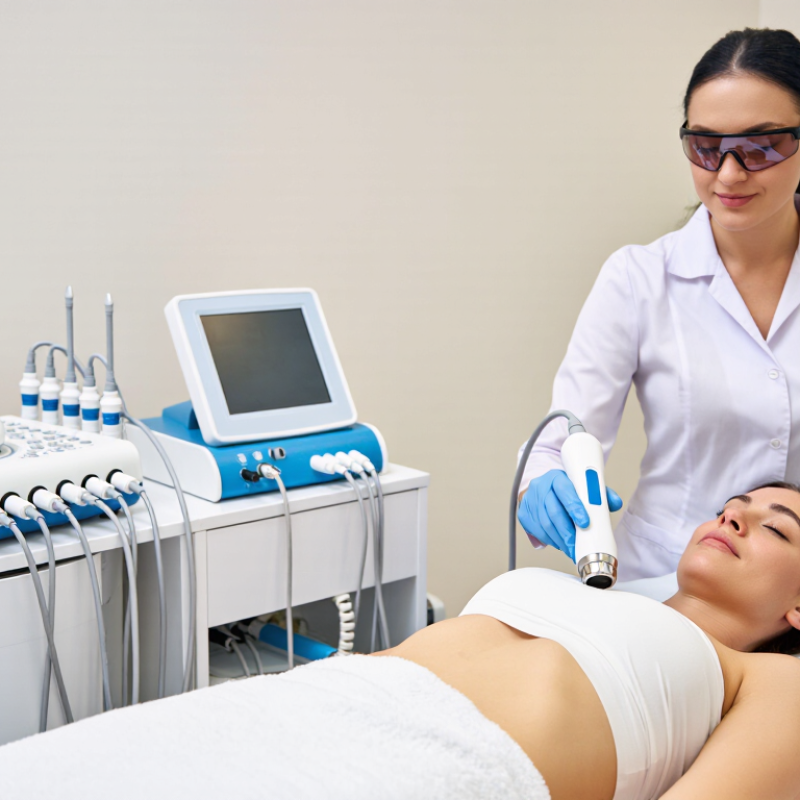
A combined belly treatment session typically begins with a consultation, not a handpiece. The practitioner reviews medical history, checks the treatment area, and explains that results vary. The abdomen is cleaned, and gel may be applied to help the device glide. Some clinics use ultrasound cavitation first, moving the applicator slowly across marked sections. Radiofrequency may follow, warming the skin and underlying tissue. The order and timing depend on the device and its instructions. Warm, not painful. Tell the practitioner if the heat feels uncomfortable.
During radiofrequency treatment, the applicator should stay moving, with temperature and skin response monitored. Sessions can last from about 30 to 60 minutes, depending on the area and equipment; this is not a universal protocol. The American Society of Plastic Surgeons’ 2023 procedural statistics reported about 25.4 million minimally invasive cosmetic procedures in the United States. That figure reflects procedure volume, not proof that combined RF and cavitation works better. Ask what outcomes the clinic measures, what risks apply, and how many sessions are proposed. Noninvasive contouring is not weight loss, and evidence for a particular combination may be limited. The details matter.
Radiofrequency (RF) delivers controlled heat to tissue, while ultrasound cavitation uses sound waves to affect fat cells. Combining them may offer complementary approaches to body contouring, rather than a proven shortcut to major fat loss.
The American Society of Plastic Surgeons reported 191,030 noninvasive fat-reduction procedures in the United States in 2023. That figure reflects procedure volume, not proof that combining treatments works better. Evidence for combination protocols remains limited, and results vary.
Some providers use cavitation first, then RF to warm the treatment area and support a firmer appearance. A person may notice a subtle change in waist measurements over several sessions, but this is not the same as weight loss. Temporary redness or warmth can occur.
Treatment suitability depends on health history, device settings, and trained clinical assessment. Small but important: ask what outcomes are realistic and how they are measured.
Tips: Choose a qualified provider who explains risks and screening criteria. Ask for before-and-after measurements under consistent conditions, not just photographs. Drink water as advised, and avoid treating a single session as decisive. If pain, persistent swelling, or skin changes occur, contact a healthcare professional. These steps do not guarantee results, and the evidence deserves continued scrutiny.
Combining radiofrequency (RF) heating with ultrasound cavitation may target tissue through different mechanisms, but strong evidence for the pairing remains limited. Small clinical studies report changes in circumference, yet protocols, treatment areas, and follow-up periods differ. That makes headline results difficult to compare. The ISAPS 2023 Global Survey counted about 19.1 million nonsurgical aesthetic procedures worldwide. That figure reflects demand, not proof that a specific combination works. Results vary.
These treatments contour body areas; they are not reliable weight-loss methods. The U.S. FDA notes that noninvasive body contouring may have temporary effects and can cause pain, redness, swelling, burns, or changes in skin sensation, depending on the device. A qualified clinician should review medical history, implants, pregnancy, and reduced skin sensation before treatment. Device instructions matter. Results also depend on fat distribution, operator technique, device settings, and consistent measurements. A tape measure can shift by centimeters. Photos taken in consistent lighting help, but cannot remove expectation bias. Small changes matter. Ask for the study behind any promised result, including its sample size and follow-up period.
Radiofrequency warms tissue beneath the skin. This may support collagen remodeling and improve mild skin laxity over time. It can feel like a heating pad.
It uses ultrasound pressure changes intended to affect localized fat tissue. Results can vary. Different tools, different targets.
They may affect contour and skin appearance, but major fat loss is not guaranteed. A flatter look does not necessarily mean substantial fat loss.
No. They are body-contouring treatments, not reliable weight-loss methods. Balanced eating and regular activity still matter.
Evidence remains limited. Small studies report circumference changes, but their methods and follow-up periods differ. I may be oversimplifying; the details matter.
They should review medical history, skin condition, implants, pregnancy, and reduced skin sensation. They should also discuss realistic goals.
Depending on the device, effects may include pain, redness, swelling, burns, or changed skin sensation. Report unusual pain or prolonged redness.
Take baseline photos in consistent lighting and measure the same area consistently. A tape measure can shift by centimeters. Expectations can still affect comparisons.
Ask which device and treatment area are planned, and how many sessions are typical. Ask for supporting study details, including sample size and follow-up.
Radiofrequency (RF) and cavitation are noninvasive body-contouring approaches that use different forms of energy. RF delivers controlled heat to tissue, while cavitation uses ultrasound waves to create effects within targeted fatty tissue. Because their mechanisms differ, combining them may offer a complementary approach to abdominal contouring, though neither should be presented as a guaranteed way to lose weight or selectively remove belly fat.
A typical session may involve assessing the treatment area, applying each modality according to the device’s instructions, and monitoring comfort and skin response. People often explore how to combine rf and cavitation for fast belly fat reduction, but results depend on factors such as the treatment protocol, individual health, and lifestyle. Evidence and outcomes vary, and temporary redness, warmth, or sensitivity may occur. A qualified provider can discuss suitability, potential risks, realistic expectations, and whether these treatments are appropriate for a person’s goals.